Shibori
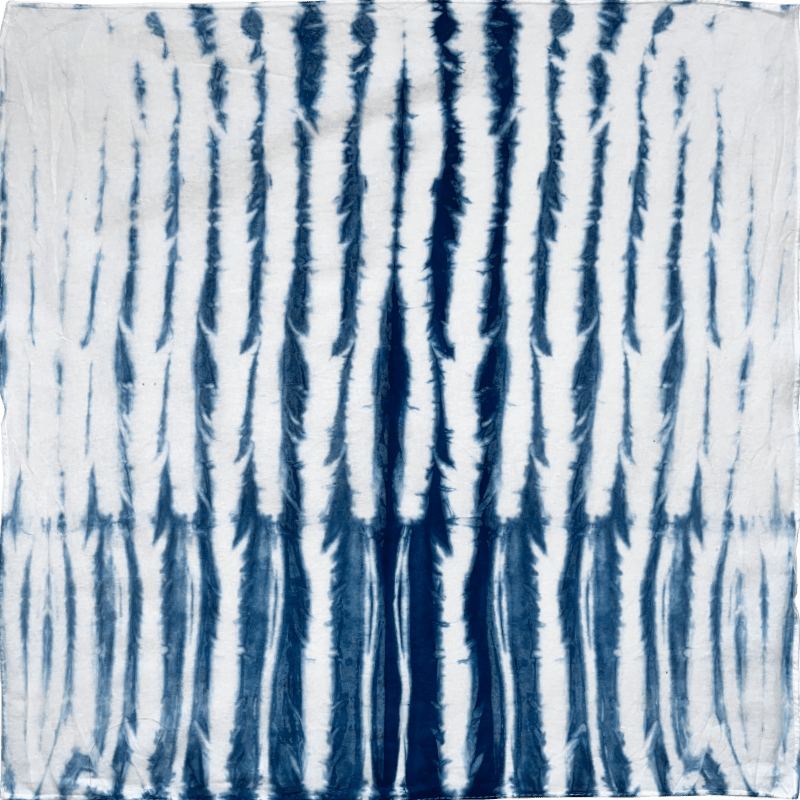
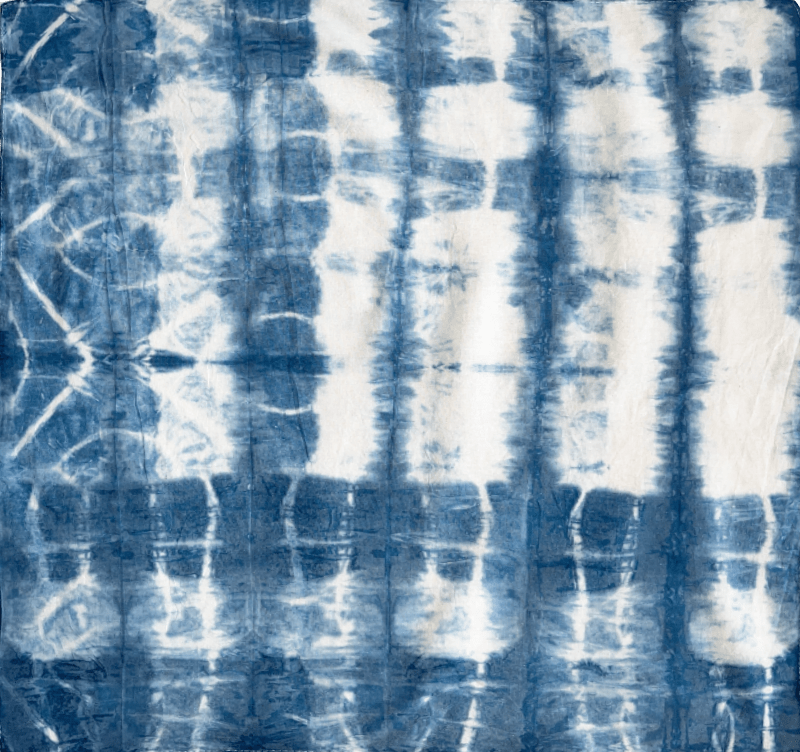
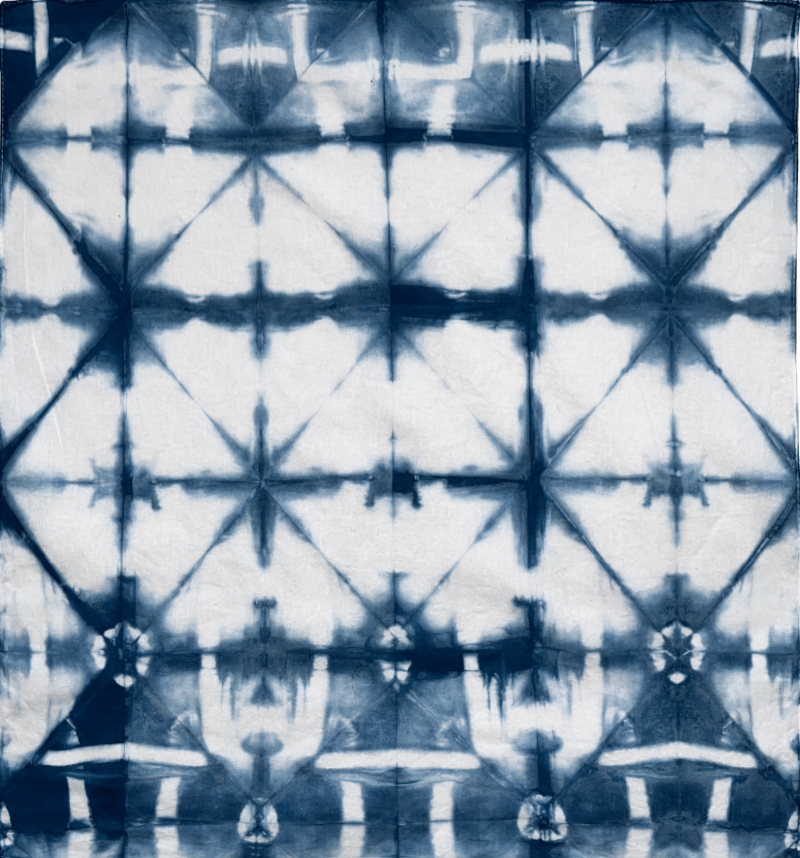
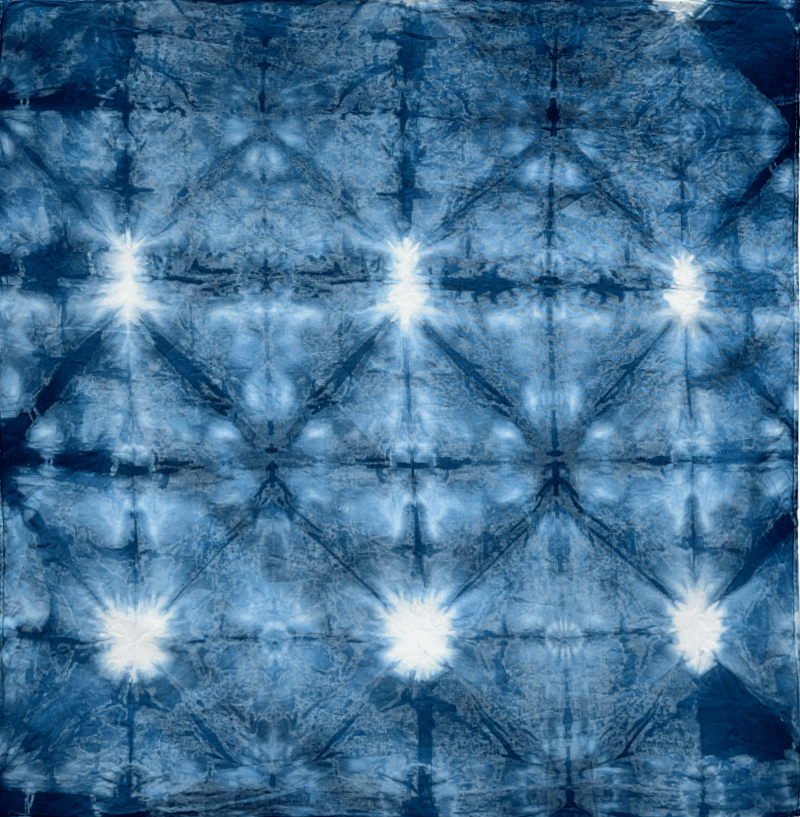
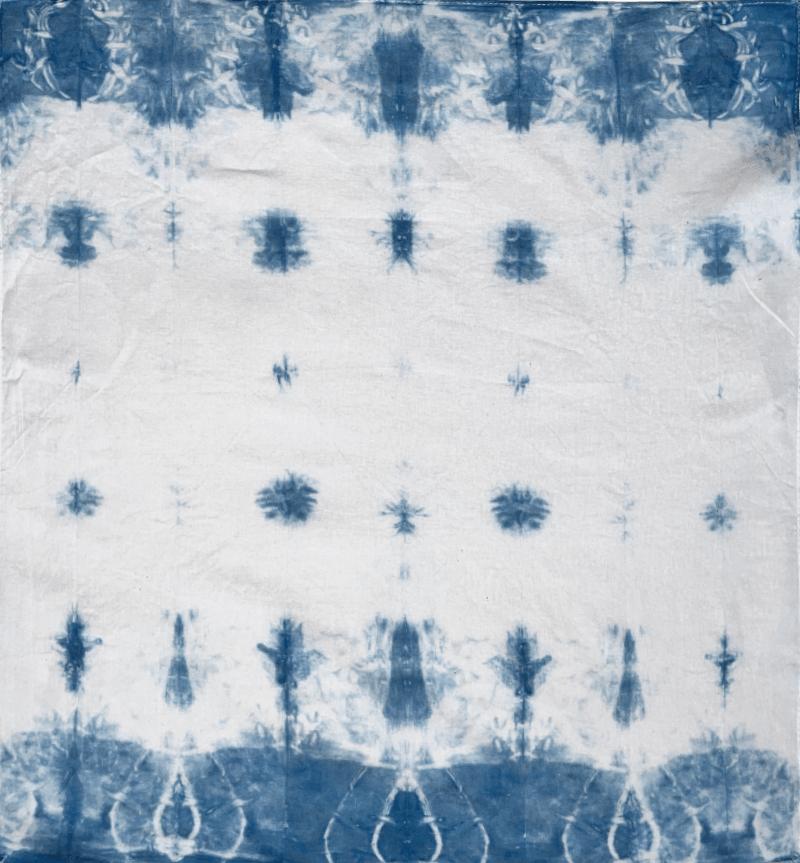
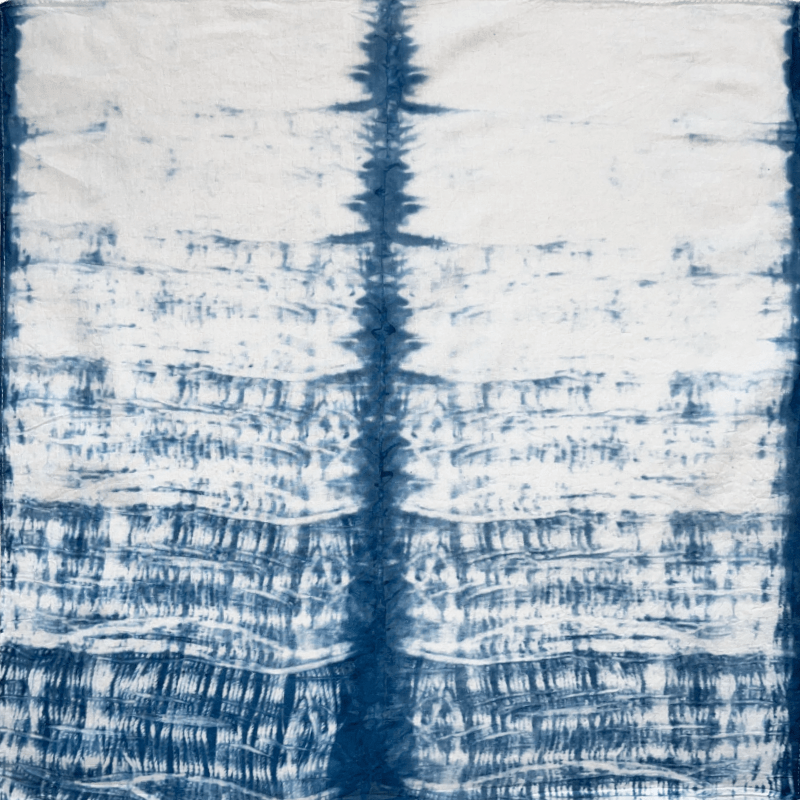
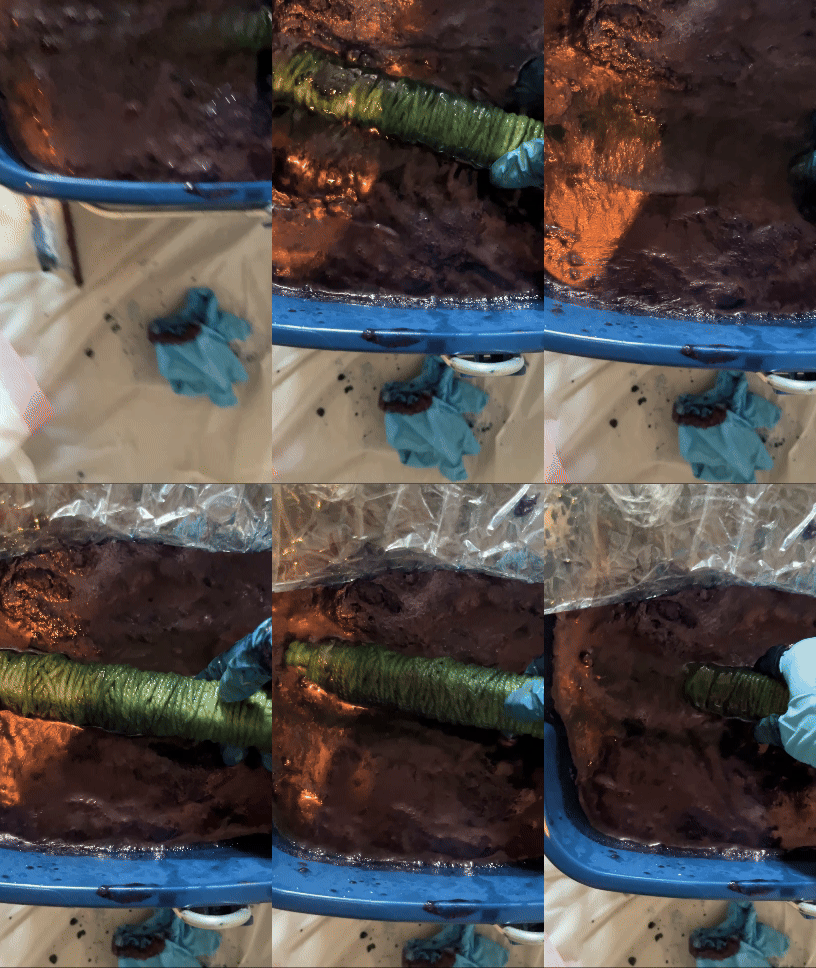
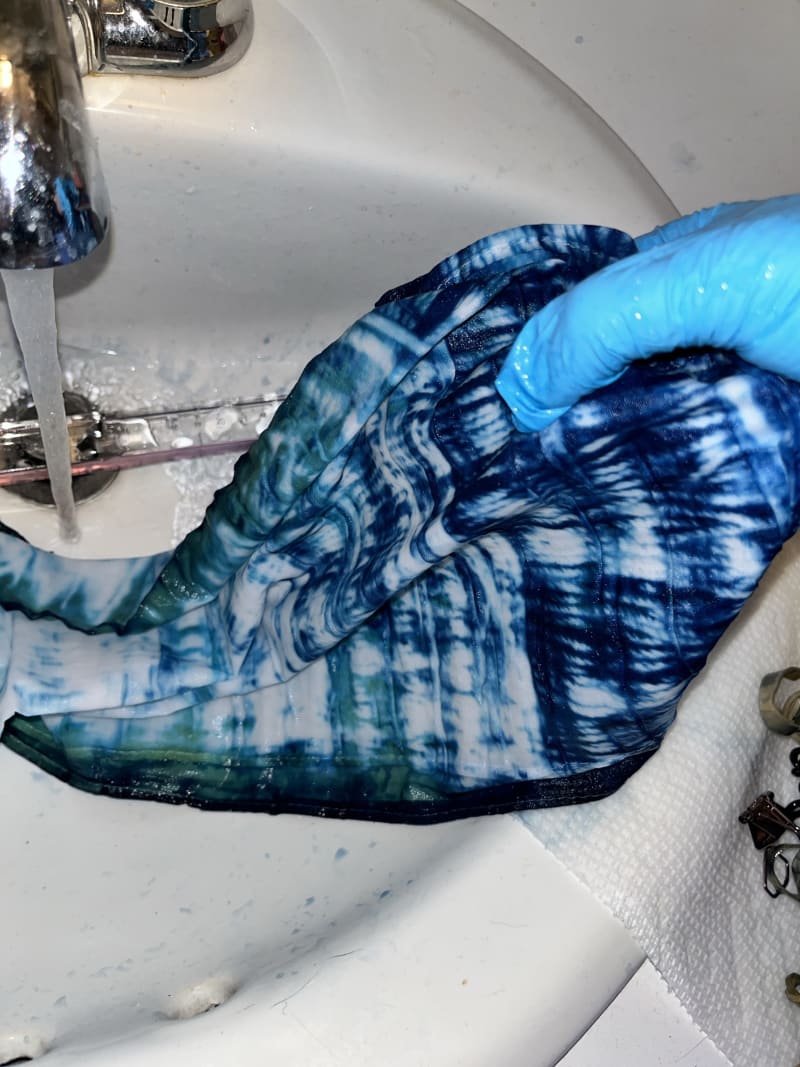
Indigo shibori resist dyeing on cotton. Itajime, arashi, and kumo techniques explored across a series of scarves. Each fold becomes a blueprint. The dye reads the pressure, the cloth holds the pattern after the resist is removed.
Fiber: Cotton · Dye: Natural indigo vat · Technique: Itajime, arashi, resist binding
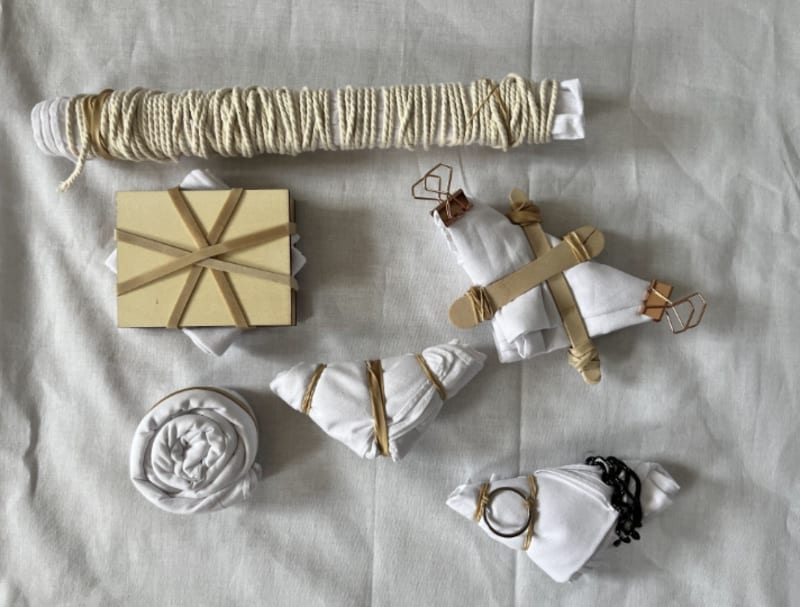
Shibori is a Japanese resist dyeing tradition. The cloth is folded, bound, clamped, or wrapped before it meets the dye bath. The structure of the resist determines the pattern. Each technique produces a distinct geometry.
- Itajime — folding and clamping between shaped boards, producing geometric repeats
- Arashi — wrapping cloth diagonally around a pole and compressing it, creating diagonal pleated patterns
- Kumo — binding and pleating to create circular, sunburst-like patterns
Process

Results